Friday, October 31, 2008

Subtle Switches

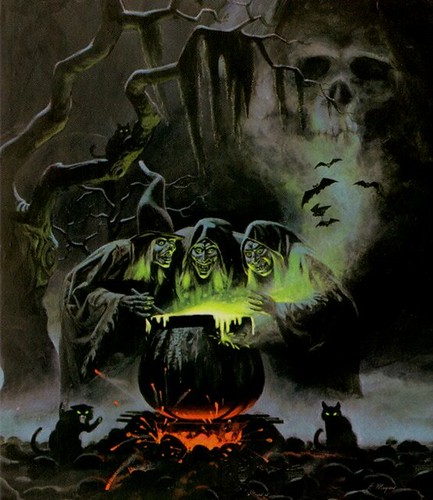
witches

subtle switches
west bearing witches
follow night follow night

cast the net wide
you unsewn tatters of
most beckoning costume

drink well this well
deep as a desert tree
spy the the owl by one eye
invisible dreams
tonight's success
tomorrow's reprieve

are you sought enough to taste?
to suit
to need

hidden radios glow forbidden breath
under the door
stations identify the roaming hoards
burning, consuming, hunting
another day's dusk

old monsters freshly released
from the subconscious, sub-regilith
dear earth's ID

cash your accounts now
bake your bread
keep the teeth in your mouth
in your head

eye to crack
struggle to breathe quiet
and wait

the breakers are breaking
thrown hard over
by the overload

the lines are coming down
country eating town
eating at the concentrations of old power
embers buried deep in the ash

so strange days upon us again

old legends before sin

we to burn again

Tuesday, October 28, 2008

In A Strict Sense

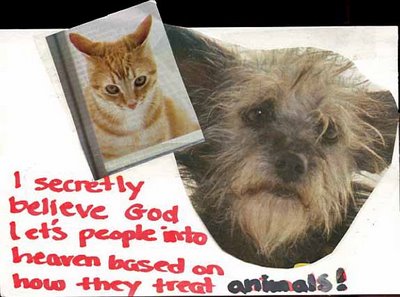
animals


...I secretly believe God lets people into heaven based on how they use punctuation!

Monday, October 06, 2008

Here It Comes

blackswan3901

the peanuts drop to concrete
the crowd hushes and roars complete
the stance of home, of each base about the diamond

turn, arms raised, pointing, staring

from outside
from left field
from the back screaming
from...


it is here

Friday, September 26, 2008

Like Old TJ Said

parasite

Hat tip to Ure

Hard to get much better perspective than Thomas Jefferson's letter to Treasury Secretary Albert Gallatin in 1802:

“I believe that banking institutions are more dangerous to our liberties than standing armies. If the American people ever allow private banks to control the issue of their currency, first by inflation, then by deflation, the banks and corporations that will grow up around [the banks] will deprive the people of all property until their children wake-up homeless on the continent their fathers conquered. The issuing power should be taken from the banks and restored to the people, to whom it properly belongs.”

Tuesday, September 23, 2008

Helicon Hail

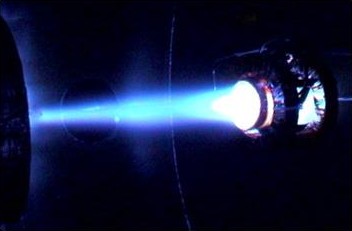
Helicon Plasma Hnozzle

Rocks falling through the paper trail,
Holly holly, xmas is going to fail,
The ol’ pale face is looking more pale.

Somethin’ cold following our trail,
Leading us from behind the hive,
Helicon Hellstorm, Hector’s alive.

Eyes ahead, seeing the way yet to thrive.
Find ourselves, selling cool drinks along the Road.
Find the ones, burying their dreams like the mud-borne toad.

Come along and tow with me, this lifting load.
Come see our killer’s teeth brighten the night.
Come remember why we forgot not to bet on kites.

It’ll be the scene of sight.
We’ll know why we’re here again.
We’ll know the name, friend.

round
bend
found
send

And in the end,
The Beatles will sing youth innocent and forbidden,
Whether Broca, Paladin, Cain, or Biden,

I envy not who will be reign-hung and spit ridden.
I’ve always known I’ll last till we march,
Trudging our arms together through the final, gloriful arch.

A sight of smaller lands, and water for the parched.
Smaller hands probing from the midnight dark.
They will be they, night ended and deemed by morning lark.

And in the ending again, eye to eye, cathartic.
Dreamers will wake, and walkers will fall.
We’ll discover within us both the hammer and mortar for the wall.

Tuesday, September 02, 2008

Monday, July 28, 2008

Briefest Bird

Slide_1_Letter_e

see here
I'd thought you'd gone
thought it was over
not lost, but beyond

and that's ok,
i know the way
there's no honor among thieves,
and ghosts no obligation to grieve

like many of us
your friends
we feared to believe
there was a mean to the ends

and that's ok
it's good today
to see the briefest word
flitting shadow of a bird

who knows how far that storm
blowing rainbow colors apart
I love to see just your curve upon the sky
and not ask when, how, or why

Wednesday, July 23, 2008

Why Does This Sound Familiar?

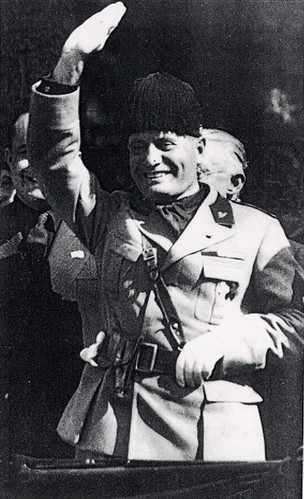
mussolini

Fascists opposed what they believed to be laissez-faire or quasi-laissez-faire economic policies dominant in the era prior to the Great Depression. People of many different political stripes blamed laissez-faire capitalism for the Great Depression, and fascists promoted their ideology as a "third way" between capitalism and Marxian socialism. Their policies manifested as a radical extension of government control over the economy without wholesale expropriation of the means of production. Fascist governments nationalized some key industries, managed their currencies and made some massive state investments. They also introduced price controls, wage controls and other types of economic planning measures. Fascist governments instituted state-regulated allocation of resources, especially in the financial and raw materials sectors.

Waiting In The Sea

1985---Waiting-for-the-Sea (lauriezagon)


what heroes fall in times of traps
without recovery

when so blue the skies
what heroes can we be

what time is time before the tragedy

what thoughts can fly without urgent need

what life is life with such luxury

will we still meet the scene
we fill with empty space

will we still live within our means
to the edges of our face

what solemn promise can we keep
when no earth shifts below our feet

what heroes can there be
in a land of reeless tv

what lies can we see
in nights unkempt and days asleep

what thunder rolls only beyond horizon
will stories be only of far off trolls and grazing bison

is it only blindness that won’t be seen

is there something else
is there something coming
is there some strange discovery
waiting in the sea

have we seen
the faces in the market have begun to mark it

have we learned how
the powers of survival are numbered and weighed

are the ears beginning to perk to evolution delayed

what heroes can there be
in a land of living free

what sights to behold beyond the end of the street
what sounds to hear from underneath personal megaphones
what words to share when absent electric and alone

do the questions begin to bother
unmarked as shapes in the water

do the waves form the air or the ocean
what saviors will we cling to
what bursting rays will betray us
showing the shadows' nature finally

is this over, or but begun

is there something new on its way to me

waiting in the sea

Tuesday, July 22, 2008

When Facts Change...

-David Evans, July 18 2008, The Australian

hide the sausage


I DEVOTED six years to carbon accounting, building models for the Australian Greenhouse Office. I am the rocket scientist who wrote the carbon accounting model (FullCAM) that measures Australia's compliance with the Kyoto Protocol, in the land use change and forestry sector.

FullCAM models carbon flows in plants, mulch, debris, soils and agricultural products, using inputs such as climate data, plant physiology and satellite data. I've been following the global warming debate closely for years.

When I started that job in 1999 the evidence that carbon emissions caused global warming seemed pretty good: CO2 is a greenhouse gas, the old ice core data, no other suspects.

The evidence was not conclusive, but why wait until we were certain when it appeared we needed to act quickly? Soon government and the scientific community were working together and lots of science research jobs were created. We scientists had political support, the ear of government, big budgets, and we felt fairly important and useful (well, I did anyway). It was great. We were working to save the planet.

But since 1999 new evidence has seriously weakened the case that carbon emissions are the main cause of global warming, and by 2007 the evidence was pretty conclusive that carbon played only a minor role and was not the main cause of the recent global warming. As Lord Keynes famously said, "When the facts change, I change my mind. What do you do, sir?"

There has not been a public debate about the causes of global warming and most of the public and our decision makers are not aware of the most basic salient facts:

1. The greenhouse signature is missing. We have been looking and measuring for years, and cannot find it.

Each possible cause of global warming has a different pattern of where in the planet the warming occurs first and the most. The signature of an increased greenhouse effect is a hot spot about 10km up in the atmosphere over the tropics. We have been measuring the atmosphere for decades using radiosondes: weather balloons with thermometers that radio back the temperature as the balloon ascends through the atmosphere. They show no hot spot. Whatsoever.

If there is no hot spot then an increased greenhouse effect is not the cause of global warming. So we know for sure that carbon emissions are not a significant cause of the global warming. If we had found the greenhouse signature then I would be an alarmist again.

When the signature was found to be missing in 2007 (after the latest IPCC report), alarmists objected that maybe the readings of the radiosonde thermometers might not be accurate and maybe the hot spot was there but had gone undetected. Yet hundreds of radiosondes have given the same answer, so statistically it is not possible that they missed the hot spot.

Recently the alarmists have suggested we ignore the radiosonde thermometers, but instead take the radiosonde wind measurements, apply a theory about wind shear, and run the results through their computers to estimate the temperatures. They then say that the results show that we cannot rule out the presence of a hot spot. If you believe that you'd believe anything.

2. There is no evidence to support the idea that carbon emissions cause significant global warming. None. There is plenty of evidence that global warming has occurred, and theory suggests that carbon emissions should raise temperatures (though by how much is hotly disputed) but there are no observations by anyone that implicate carbon emissions as a significant cause of the recent global warming.

3. The satellites that measure the world's temperature all say that the warming trend ended in 2001, and that the temperature has dropped about 0.6C in the past year (to the temperature of 1980). Land-based temperature readings are corrupted by the "urban heat island" effect: urban areas encroaching on thermometer stations warm the micro-climate around the thermometer, due to vegetation changes, concrete, cars, houses. Satellite data is the only temperature data we can trust, but it only goes back to 1979. NASA reports only land-based data, and reports a modest warming trend and recent cooling. The other three global temperature records use a mix of satellite and land measurements, or satellite only, and they all show no warming since 2001 and a recent cooling.

4. The new ice cores show that in the past six global warmings over the past half a million years, the temperature rises occurred on average 800 years before the accompanying rise in atmospheric carbon. Which says something important about which was cause and which was effect.

None of these points are controversial. The alarmist scientists agree with them, though they would dispute their relevance.

The last point was known and past dispute by 2003, yet Al Gore made his movie in 2005 and presented the ice cores as the sole reason for believing that carbon emissions cause global warming. In any other political context our cynical and experienced press corps would surely have called this dishonest and widely questioned the politician's assertion.

Until now the global warming debate has merely been an academic matter of little interest. Now that it matters, we should debate the causes of global warming.

So far that debate has just consisted of a simple sleight of hand: show evidence of global warming, and while the audience is stunned at the implications, simply assert that it is due to carbon emissions.

In the minds of the audience, the evidence that global warming has occurred becomes conflated with the alleged cause, and the audience hasn't noticed that the cause was merely asserted, not proved.

If there really was any evidence that carbon emissions caused global warming, don't you think we would have heard all about it ad nauseam by now?

The world has spent $50 billion on global warming since 1990, and we have not found any actual evidence that carbon emissions cause global warming. Evidence consists of observations made by someone at some time that supports the idea that carbon emissions cause global warming. Computer models and theoretical calculations are not evidence, they are just theory.

What is going to happen over the next decade as global temperatures continue not to rise? The Labor Government is about to deliberately wreck the economy in order to reduce carbon emissions. If the reasons later turn out to be bogus, the electorate is not going to re-elect a Labor government for a long time. When it comes to light that the carbon scare was known to be bogus in 2008, the ALP is going to be regarded as criminally negligent or ideologically stupid for not having seen through it. And if the Liberals support the general thrust of their actions, they will be seen likewise.

The onus should be on those who want to change things to provide evidence for why the changes are necessary. The Australian public is eventually going to have to be told the evidence anyway, so it might as well be told before wrecking the economy.

Dr David Evans was a consultant to the Australian Greenhouse Office from 1999 to 2005.

Wednesday, July 02, 2008

*Rumble

hat tip to Urban for these June 30th words by Kunstler...


Worse Than Grandma's Depression

This isn't so funny anymore. Intimations of a July banking collapse rumbled though the Internet this weekend while mainstream news orgs like The New York Times and CNN pulled their puds over swift boats and Amy Winehouse's performance technique. Something is happening, and you don't know what it is, do you Mr. Jones...? to quote the master.

What's happening is that American society is sliding into a greater depression than the one Grandma lived through. On the technical side, there has been unending controversy as to whether we're gripped by inflation or deflation. It's certainly deceptive. Food and gasoline prices are rising faster than the rivers of Iowa. But the prices of assets, like houses, stocks, jet-skis, GMC Yukons and pre-owned Hummel figurines are cratering as America turns into Yard Sale Nation.

We're a very different country than we were in 1932. In that earlier crisis of capital, few people had any money but our society still possessed fantastic resources. We had plenty of everything that our land could provide: a treasure trove of mineral ores and the equipment to refine it all, a wealth of oil and gas still in the ground, and all the rigs needed to get at it, manpower galore (and of a highly disciplined, regimented kind), with fine-tuned factories waiting for orders. We had a railroad system that was the envy of the world and millions of family farms (even despite the dust bowl) owned by people who retained age-old skills not yet degraded by agribusiness. We had fully-functional cities with operating waterfronts and ten thousand small towns with local economies, local newspapers, and local culture.

We had a crisis of capital in the 1930s for reasons that are still debated today. My own guess is a combination of a bad debt workout that sucked "money" into a black hole (since money is loaned into existence, but vanishes if the loans are not systematically paid back) plus a gross saturation of markets, meaning that every American who had wanted to buy a car or an electric toaster had done so and there was no one left to sell to. (The first round of globalism -- 1870 - 1914 -- had shut down after the fiasco of World War One.)

Our debt problems today are of a magnitude so extreme that astronomers would be hard pressed to calculate them. By any rational measure our society is comprehensively bankrupt. From the federal treasury down to the suburban cul-de-sacs so much loaned money is either not being paid back, or is at risk of never being paid back, that the suckage of presumed wealth has passed through an event horizon out of the known universe into some other realm of space-time, never to be seen again in this realm. This would seem to be the very essence of monetary deflation -- money defaulted out-of-existence.

This condition is partly disguised by both the loss of credibility of US currency and real-world scarcities of oil and food, but the upshot will be something at least twice as bad as the Great Depression of the 1930s: people with no money in a land with no resources (with manpower that has no discipline), hardly any family farms left, cities that are basket-cases of bottomless need, comatose small towns stripped of their assets and social capital, an aviation industry on the verge of death, and a railroad system that is the laughingstock of the world. Not to mention the mind-boggling liabilities of suburbia and the motoring infrastructure that services it.

The banks have been doing their death dance for an entire year now, pretending that their problems are those of mere "liquidity" (i.e. cash-on-hand) rather than insolvency (no cash either on hand or in the vault and nothing else to sell to raise cash except worthless "creative" securities that nobody would ever buy). But the destruction of money (resulting from loans not paid back) is now so intense that the game of pretend has reached its terminal point. The question for the moment is exactly who and what will be crushed as these institutions roll over and die.

Complicating matters is a global oil predicament that is really not hard to understand, but which the organs of news and opinion have obdurately failed to explicate for an anxious public. Call it Peak Oil. There are only a few elements of it you need to know. 1.) that demand has now permanently outstripped supply; 2.) that new discoveries are too meager to offset consumption; 3.) That under under the circumstances, the systems we rely on for daily life are crumbling. I've called this situation The Long Emergency.

Our chances of mitigating this, and of continuing our current way-of-life is about zero. I've tried to promote the idea that rather than waste remaining resources in the futile attempt to sustain the unsustainable (i.e. come up with "solutions" to keep suburbia running), that we should begin immediately making other arrangements for daily life -- mainly by downscaling and re-scaling everything from farming to commerce to the way we inhabit the landscape -- but my suggestions have proven unpopular even among the "environmental" elites, who are too busy being entranced by new-and-groovy ways to keep all the cars running.

So where we are at now is the equivalent of standing in the slop by the ocean shore under a gathering hundred-foot-high wave that is about to come crashing down on our heads. Since I sure don't know everything, I can't say how this will all play out in the months ahead, especially with the presidential election coming at the exact moment that voters will be turning on their furnaces for the cold and dark winter beyond. I would venture to say that so far our society as a whole has done a piss-poor job of comprehending the situation. But there is still the possibility, with four months of politicking left, that the nature of our predicament can be articulated in a way that few can fail to understand, the way Mr, Lincoln articulated the terms of the Civil War on the eve of its fateful outbreak.

Friday, June 13, 2008

Wednesday, June 11, 2008

Almost Camping Season!

...there's always a good reason to go...

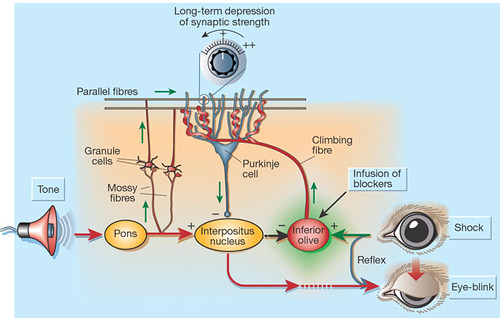
Blink. Life. Blink.

blink chamber

...well I guess I could write.
Something we seem to never have time for anymore.
Never have unction for anymore.
Never have passion for anymore.
But those are all lies.

So here we are, dear reader, dear writer.
Been a while hasn’t it?
What shall we talk about it?
The future? The past? The ever expanding present?

I’m not sure.

There are times in life, moments really, when you realize how quickly it is passing.

Those are usually unfun moments...
Because otherwise, time would be “flying” wouldn’t it?

So what does that mean?

“Life is passing.”

Is life precious because of its fleeting nature?
Is life precious because of its beauty?
Because of its pain?
Because life is an indivisible mix of both beauty and pain?

What’s the point?
What are we really working so hard for here?
Do you really think it’s to secure your place in the afterlife?
That all your loves and secrets will be protected and preserved once your heart stops and the brain’s electrical signature dwindles to nothing?

In the face of the great unknown, the great unknowing... life looks pretty bleak doesn’t it?

So what keeps us going?
What keeps us questing and questioning?

Is it merely millions of years of instinct... that provides a false sense of providence, of a conjured spiritual identity... so that we can be buoyed by baseless belief in an existence larger than the confines of our flesh?

Whoa, serious questions there.

And no answer to them can be silly.

The truth, as truth in a baby-fed bubble like the brain can be is: the answer doesn’t matter.

Who answers, probably matters the most.

Consciousness is a slippery fish.
A shape, a shadow that yet reflects light, beneath the mental water, refracted and flickering.

Are we the fish?
Are we the lake?
Are we the observer at the water’s edge?
A pretty good set up for Ego, Id, and SuperEgo there.

We are the world awake.
The universe, its material and energetic parts, awake.

I don’t want to Dis the rocks here, but how much does a rock think about?
Just what mental burdens does it have to deal with?

We are but rocks (material) energized (electricity converted from TacoBell).
Organic machines resting on mineral stilts run by straps of connective contracting tissue.
And then there’s the ‘Us’, the ‘Me’, aka consciousness.

Awake.

Awake that it’s awake.
The alarm clock constantly going off... you’re awake, I’m me! you’re awake, I’m me! you’re awake, I’m me!

It’s funny.
Or rather, we think everything is funny.
We deal with the complex, conflicting observations of the universe around us with the tool of irony.
Something is, and not is.
A paradox of meaning... ergo, the HAHA!

So what’s the point?
What’s the answer?
What is salvation and the consequence of ambient faith??

Letting the riddle continue;
Flying diligently by the seat of one’s pants
Riding the joke of the universe to its invisible natural conclusion;

11:11 AM

It’s like when you throw a baseball.

Your mind and body calculate millions of times as you grip it, crank your arm, spot your target.
But once you let it go
That’s the sweet spot of life.
Giving up contact, for a bit
Being the ball, the ball’s influence, seeing the impact
Releasing your actions from yourself
Dissociating your choices from your existence for sanity’s sake
Not taking yourself too seriously!

We’re all responsible for ourselves, whether we know it or not.
Responsible for how the ball is thrown
But to have thrown it.. and observe it flying separate from you,
is relief.

And this repeats non-identically with every tick of the clock, with every cc of blood we pump through us.

The “truth” is the universe/life/existence is but information,
An utterly complex system of information
Interacting... as you the writing reader, and I writer reading are interacting.

And we can’t hold it all
Can’t be responsible for all of it
It’s rather difficult to dicuss
Aka, philosophy

Life is goofy.
It’s a hilarious mix of order and chaos.
The mix tickles the brain like soda pop tickling your nose.
There, yet not there.
When definitions lack all definition...
All that’s left is, Wonder.


And so this essay has succeeded.
I have answered no important questions, directed no dire actions, implored no lofty considerations.
And so have answered a questioning sense, directed a focused motionlessness, implored the parts to see the whole seeing the parts.

Blink. Life. Blink.
pavolvin eye