Monday, February 26, 2007

The Next Fire

Semafore March 2006 Calendar

The next fire.

Do you see it?

This daring glowing point,
This burning planet,
This white smile,
This sweeping lighthouse,

behind

The black rocks barring the shore,
The opaque blotter of this electronic board,
The mysterious far end of Creplin’s Nebula,
The leathery texture of the double thick construction paper,
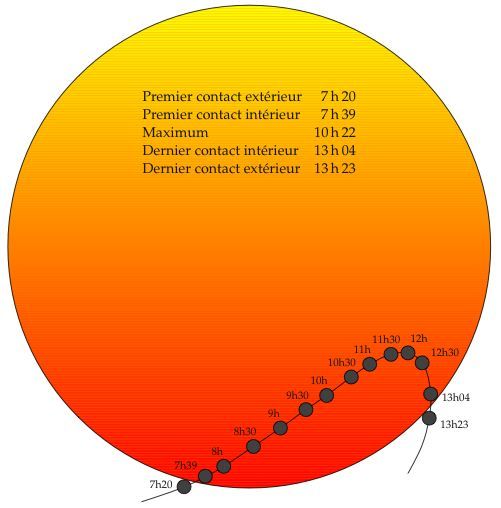
pin pricked to view a full solar eclipse.


One fire, two fire, three fire

for

heat, birth,
death, cold
and
heart’s mind’s body,
more...

I’ve seen you from behind the tree.
I’ve seen you more than I can see.

Like the light glowing in your sign,
that makes you hungry, makes you mine,
Like making magic comparing apples to oranges,
that makes the twig break beneath a monster’s arches,
Like that twenty bill, found washed and soft
that makes you arrive so damn Vernal new moon.

I know magic when I feel it
and this here is a trick,
this thumping heart,
her magic trick.

Though I must admit,
I do peer in the gloom for magic, constantly,
Such is my habit
Soaking all I see,
Sprinkling, blessing or dusting
Destiny,
Doing my best,
Drugging God’s smile.

And God’s drunk with her.

Do you see it?

It approaches like blue whales
singing the Beatles.

Beacon of dream,
Dream of message,
Divinity made simple,

for once, for love.

Tuesday, February 20, 2007

They Will Call It ORBO

Hey all you crazy kooks and cats,

I have an update on Steorn...
(the Irish company claiming to have created a revolutionary
renewable energy system)....

They have given it a name... ORBO.

this is not a link, silly rabbit!

See the latest story.


...maybe alcohol won't stop them
from taking over the world after all...

Tuesday, February 13, 2007

In The Valley Of The Shun

StevensLakes_735

In the valley of shun,
Action has begun.

Forgotten, all your tenses,
Past, present and future,
Gone, here and undone.

Let go,
Thinking pain into being.

I thought I knew enough of history,
Until I found that love rhymes often too,
When I found love rhyming all by itself,
In the valley of shun,
Somewhere between Chicago and Tupelo.

Our Fires and flood,
Riddling
Action
Elation
Insertion
Masturbation
Function
Sacred unction of
Lip licking laces tight on blue,
And her red.

Walk with me under my sun.
Forget the rains that finds your face
These often hours.

Forget the way to death.
It will never catch us but by
Our backsides,
As long as we choose forward,
Forehand
Forearm
Foretell
Forsooth
Fountain.

When we become so tired,
We lose track of the moment’s time,
We endanger the thrill of choosing our course,
And of course, we still will find some way to fly,
Because the birds that don’t, too simply die.

The cold side of life fears only our shun,
Our lovetion
Our dreamtion
Our painted inspiration
Our breathy secret inseparable
Whispering in the black,
Our perfect warm darkness
That needs no definition of dawn,
Vouchsafes no dusky remarks,
But lives only with the darling moon
Beyond the traveling shadow of our wings’ burning.

Die with me this way,
Some far off day,
In the valley of fairytales,
Found in breakfast joints after noon,
In six packs with a
“Good Morning!”
Dear friends,
In nightsome hours around our table,
Denying regrets and Tomorrow.


And little Mike says,
“I’ll see you on the chessboard
Or I’ll call you in a bit.”

And with such bites,
That’s how everything touches us,
During these days of winter longing for sleep,
Speaking Spring
Back to life.

Friday, February 09, 2007

Lend A Click!

sha

Ok, Stop.

Collaborate, And LISTEN!

My good friend, Mosaica, is doing her best to land a job as a food critic.

GO HERE:
http://www.gazette.com/interactives/critic/

AND VOTE FOR:

candidate 28

DO IT!

...thankee sai...

Thursday, February 01, 2007

"The Same Thing We Do Every Night, Pinky..."

Ok, yeah... I took a personality test.
And tested as:
INTJ - "Mastermind". Introverted intellectual with a preference for finding certainty. A builder of systems and the applier of theoretical models. 2.1% of total population.
"Jung+Enneagram (108 questions)"

Rosie points out:

"The internal form of the INTJ's thoughts and concepts is highly individualized, and is not readily translatable into a form that others will understand. However, the INTJ is driven to translate their ideas into a plan or system that is usually readily explainable, rather than to do a direct translation of their thoughts. They usually don't see the value of a direct transaction, and will also have difficulty expressing their ideas, which are non-linear."

"wow", she says, "explains the poetry"

Tuesday, January 30, 2007

Future Smugglers' Hideout

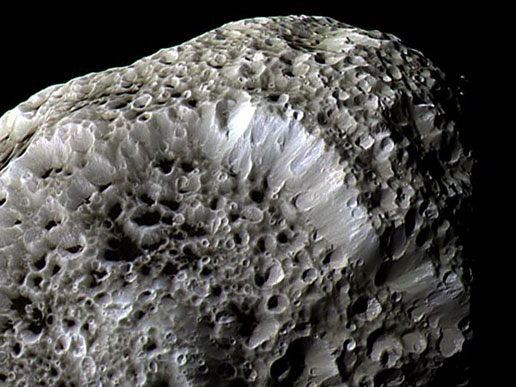
Hyperion

What lies at the bottom of Hyperion's strange craters?

No one knows.
To help find out, Cassini took this image, containing unprecedented detail, as the spacecraft swept past the sponge-textured moon in late 2005.
The image shows a remarkable world strewn with strange craters and odd surfaces.
At the bottom of most craters lies some type of unknown dark material.
Inspection of the image shows bright features indicating that the dark material might be only tens of meters thick in some places.
Hyperion is about 250 kilometers across, rotates chaotically, and has a density so low that it might house a vast system of caverns inside.

Image credit: NASA, ESA, JPL, SSI and Cassini Imaging Team

Friday, January 26, 2007

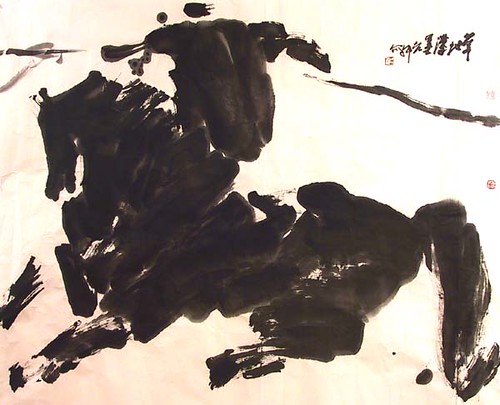
Black Rider

black rider

Dream rider carouseling,
Black horses of sleep,
For you.

For my lost far away girl,
Past rivers wide,
And swimming grasses in the wind.

On such long Fridays as this,
Working for the weekend of your life.

Think flight.
Feel the wings of your mind
And resistance to despair.

Dare to dream with me,
The black cavalry
Who stalks your subtle unconscious.

I need you,
Whomever you Turn to Be.

I breathe to try again,
Prevented by nothing,
Not death,
Not darkness,
…may my eyes create an incantation,
And find light enough in this solar system,
Among the oasis stars,
Among the washing oceans,
As they cleanse the land of all its pain.

Breathe free a breather,
Like the Dolphins driven from dry Earth.

Sleep with me.
Find the moments grown to life times
Of Searching,
Of crossing the deserts,
And always above, the sky,
The clouds hauling water through our hearts.

Know nothing,
But believe it all.

Invade my body,
You Britisher of past empire,
You refugee.

Dream with my eyes,
Dream,
Repeat,
Dream,
Repeat,
Dream,

With me…

Tuesday, January 23, 2007

258

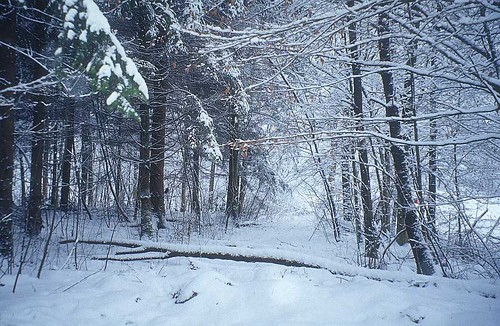
winter-picture_forest-

There’s a certain Slant of light,
Winter Afternoons --
That oppresses, like the Heft
Of Cathedral Tunes --
Heavenly Hurt, it gives us --
We can find no scar,
But internal difference,
Where the Meanings, are --
None may teach it -- Any --
‘Tis the Seal Despair --
An imperial affliction
Sent us of the Air --
When it comes, the Landscape listens --
Shadows -- hold their breath --
When it goes, ‘tis like the Distance
On the look of Death --

-Em D.

Saturday, January 13, 2007

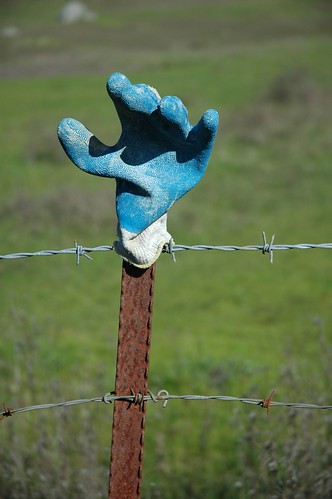
With One Glove

glove

Writing
With on glove
It’s cold
Writing

Some creation between irrelevance
And forever,
Like life.

Some days it’s good to be mammal,
Especially with thumbs.

And yeah,
I always cross up to the long view,
The macro sight,
The large dreams.

Using little things,
Reminding large things,
Reminding God we’re here,
And Wondering.

And yeah,
Must not we see both at once?
Are not we God after all?
Small pieces of a bachelor’s dinner,
Made quick,
Eaten with napkins,
Imperfect yet…attempting.

Always tempting ourselves
With that moment of bliss,
A small divinity
On a warm, wet world,
Spinning alone in the empty cold.

With one glove

Thursday, January 11, 2007

Wednesday, January 10, 2007

...Back In The Day

just watching
...a dear friend of mine (notice I didn't say "old", Liz!)
dug this poem up, that I apparently gave to her years ago
in our watching the girls go by time, on Boulder campus...


And she looked at me,
Her eyes there moving inside me,
Looking around myself,
Dreaming into me,
As is her way,
Gently feeling about in my rolling mind
As I glance around her face,
Familiar with every smiling curve
For she is one I tell
what is seen, what would be seen
As she performs that moment
of class before, punctuating
the story of comments with
the intimate language we share.
The artful communication of
trust winked at one,
smirked at the other.

Each day we stretch for the sun,
Shifting our position, now and again,
looking for someone to watch,
maybe there’s interest, maybe not

Each day met, we come closer to
the ease we all seek in another
Living in every moment together with the love
that I can look around a little at you,
romancing the shared
under the breath
chuckle of our future.
And I offer another phase,
partial to my smile
I look at you
with the feeling that I’m drowning,
and the dying’s fine.

Thursday, January 04, 2007

...

...the mirrors are clear tonight...

Under What Sun

slush

Under what sun do I walk?
What off light bathes the world,
This unknown, unspeakable color.
What mystery’s glow has found me.

I have begun walking with my eyes closed,
And find myself,
Seeing too much,
Hearing too much,
Gazing blindly into the hearts
Of the people passing in the slush filled streets.

My eyes cast low to mind the ice underfoot,
And my spine prickling
To all the triumphs and tragedies that surround me,
Follow me, precede me.

As my dear friend, Mosaica, says,
‘My third eye wide open’.

Somehow I’ve found my way
Onto the path from Gilead to the Dark Tower,
But no Roland am I,
I carry not revolvers, but a relation,
A relativity to all of your eyes,
Your slow motion tightly held pains,
Your lives of quiet desperation
And screaming nobilities.

The Thinny is rising.
It’s eerie whining fills my ears,
And worlds meld upon this spot,
This light blown away moon,
Shattering firework of some other universe’s doom,
That assumes my shadow.

I’m not asking this penetrating experience
I call my life to stop.
My paraffin nobility serves me as it does you,
But today I am closer without X-Ray glasses.
Today I see you all,
All of you in your cocoons searching for your smile,
Your halfway flights across nations of dream
That demand to be fed
Like the mouths of your babies.

I know you all closer, closely,
Here.

Eyes close and close to an open heart.

I muse, I suppose,
And regret none of it,
And none of you I see.

I’m learning.
Learning that it isn’t the relations,
The partnerships we’ve forged and lost sight of,
But just this connection, today,
With you know who,
Who knows you dearly…

Bare my stare I beg,
And I’ll walk on silent,
Leeward with the wind,
Burning Ahab’s peg.

Wednesday, January 03, 2007

Cigarette Burn On The Typed Sheet

burnin paper

Life's an educational process.
Funny we need hardship and
Laughter.

...sure the car runs revs up,
Clean and hot,
Right wit quick...

Ltlmke talking about hangings, anti freeze,
Simple flashlights...
...Dragged her out at four in the morning
To see this owl...

Partly cloudy fantasy,
Tinged with reality.
Where is the now?

I even crawl through alleys sometimes,
Four wheel drive spoils
The weather that is handed to you.

And the dreams we have for other people,
The people we think are worth more,
And the wish and the tragedy,
The skills, it's all what you do, commonly.

Interest is possibility.
Passion without growth is impotence.

Something so stripping as early 2007...
'As,' for that's all the dear human brain can do sometimes.

'Sometimes,' such a popular word,
Encompassing all and giving nothing.

And I'm here drinking a beer,
Relieving all these compromises,
Relieving my own reality
Seeking others',
Seeking some peace
That none of us experience
Yet still feel bent to, inborn and instinctually.

I'm here,
And I see 2007 as a different Work.
Whereas the year previous consumed our inner trials,
2007 will demand recognition of outer expressions,
Realities, still shocking even after Jane's Addiction.

What can I say?
Intelligence is a measure of preparation,
Whether measured in fractions of a second,
Or decades, generations, lives
Met with Intention.

First there is intelligent action,
And then emotional evaluation,
Aftermath,
The after-realm where specifics mean less.

Of course specifics is a relative term,
Based on the timing of soccer practices
Or whether or where we are to eat this week...

...I think We'll make it.

I do.

...Founded on species bias,
Or some more hopefulness of the soul...

I can only seek to survive the pain
And harp upon the glory and the new horizon's light.

Of all of you...

This is what We do,
The best of us,
And thank god,

And quote

Wednesday, December 27, 2006

Marble Of Madness

portal

My mind,
This marble of madness
This swirling, round world of cloudy colored rock.

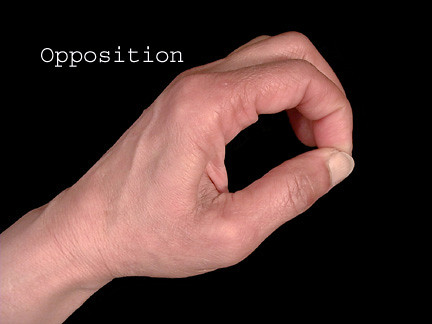
I hold the marble betwixt thumb and forefinger,
Aiming a slight angle at the target inside the ring.
Connect, and I’ll claim my right to all the worlds,
Miss and I’ll lose this, my only mind.

big-blue-marble

Holding still,
With this marble of madness
My mind quivers silently.

Raging on,
With the wayward ways waiting,
My decision won’t be born of meekness.

Finding this circle,
Broken and begging in a ripped asphalt square
Off the road to Westland,
Was luck of the man eating kind.

The marble is to be held,
Tightly,
For looseness makes your mind wander,
Slightly.


head

Marbled stone and glass,
Remembering promises,
Curling litmus sweat around the past.

Remember who I am,
For me when I do not.
Tap my shoulder
On the destined day
In this broken parking lot.

Thursday, December 21, 2006

A Bit More On Mumford

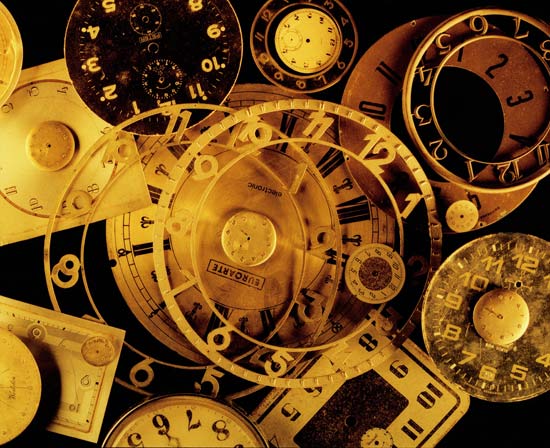
clockworks

...from Donald L. Miller's autobiography: Lewis Mumford, A Life.

Technics and Civilization is a pioneering work in the history of technology, a book that would begin to establish Mumford as this century’s leading critic of the machine age. Along with Siegfried Giedion’s later work Mechanization Takes Command, published in America in 1948, and Abbott Payson Usher’s more narrowly focused study A History of Mechanical Inventions (1929), it created the new field of the history of technology. It is both the first full-scale study in the English language of the rise of the machine in the modern world and one of the first scholarly studies in any language to emphasize the interplay of technology and the surrounding culture. Mumford describes not simply the work of inventors and scientists but also the cultural sources and moral consequences of the breakthroughs in technology and science. He places technology squarely within the context of what he calls the social ecology.

Drawing on the latest German scholarship, Mumford analyzes the process of ideological preparation for full mechanization. Before his book appeared most English-speaking scholars placed the beginnings of the Industrial Revolution in the eighteenth century, when Watt introduced his steam engine and when machine power was applied to the production of textiles. In Munich, however, Mumford discovered a challenging new literature on the history of technology that caused him to locate the origins of the machine age as far back as the Middle Ages, when a number of cultural transformations occurred that prepared the ground for the larger technical revolution that altered all of Western culture. “Men became mechanical,” in Mumford’s words, “before they perfected complicated machines to express their new bent and interest.”

The passion for order, regularity, and regimentation appeared first in the routinized world of the medieval monastery, then spread to the army and the counting-house before it finally entered the factory. In this mental transformation the clock played a crucial role. It, not the steam engine, was the most important machine of the industrial age, an interpretation now widely accepted by historians of science and technology. The mechanical clock brought a new regularity to life, for it was not merely a means of keeping track of the hours but of synchronizing human behavior. The first primitive clocks were used in monasteries to regulate the ringing of the bells, which in turn regulated the daily movements of the monks; later, to become “as regular as clockwork” became “the bourgeois ideal.” Timekeeping also became essential to an efficiently run system of production and transportation.

With the new conception of time came a closely related concern with exact measurement; together these developments led to the emergence of what Mumford calls a new scientific picture of the world. In its urge to comprehend and control the physical world, the new science, he argues, defined as “real” only those aspects of experience that were external and repeatable, that could be studied and verified by careful experimentation. Existence was separated into units that could be “weighed, measured or counted”; all else was judged “unreal.” This denial of the organic, in Mumford’s view, allowed the West to surrender to the machine, to turn inventions and mechanical contrivances that other cultures, such as the Chinese, possessed in abundance, into what he calls “the machine.” By this term he meant not only mechanical devices but a mode of life geared to the pace of high-speed technology, and committed to the technological ideals of specialization, automation, and rationality.

For Mumford, then, the emergence of the machine was fundamentally a mental revolution, a movement from organic to mechanical thinking; this is in direct contradiction to Karl Marx, who saw technology shaping values and ideas, and no the reverse. Mumford’s refusal to see the machine as a force independent of human will and purpose explains the underlying optimism of Technics and Civilization. Rejecting all forms of technological or economic determinism, he insists that human desires, decisions, and dreams influenced the course of modern invention fully as much as invention influenced modern sensibility. Our modern machine world was a creation of human effort and will, and any thoroughgoing change would first involve a change in values and social priorities. Mumford had said this before, but from this point forward this theme became the theme of his life and art.

Thursday, December 14, 2006

A Bit On Mumford

LewisMumford

-from Donald L. Miller's autobiography: Lewis Mumford, A Life.

Moreover, like Plato and Emerson, Mumford held strongly to the notion that the good life involves more than a reordering of economic and political institutions. While essential, this would have to be preceded by a transformation of the mechanistic mode of life--the psychological submission to the machine process and the power state--that had created a new personality type--bureaucratic man--in capitalist and socialist societies. Mumford called for a complete transformation of the consciousness of industrial man, the creation of a "new humanism," an organic mode of thinking and acting that recognizes "the inner and the outer, the subjective and the objective, the world known to personal intuition and that described by science [as] a single experience." While some radicals expected such a value change to occur after the revolution, for Mumford, this value change was the revolution.

The place to begin this process of cultural change, Mumford declared, was not with the nation, an artificial creation of statesmen and politicians, but with the geographic region, an area possessing a common climate, natural environment, and culture. He urged his fellow reconstructionists to begin by thinking small. Avoid sweeping national crusades for change and start immediately in your own region and locale to lay the basis for the renewal of life, he advised, just as Geddes had done in Edinburgh.

Mumford saw Patrick Geddes's civic survey method--a detailed, firsthand diagnosis of a region's natural and human resources--as the starting point and foundation for all regional reconstruction efforts. The outstanding feature of Geddes's sociological method, in his view, was its union of "concreteness and synthesis." The solid foundation of "localized" knowledge that would emerge from the survey was precisely what he found absent from most radical and utopian schemes, "paper programs for the reconstruction of a paper world." But in synthesizing the work of a number of regional investigators from a variety of fields and professions, the survey avoided as well the narrow compartmentalization of knowledge and the restricted vision that characterized specialist studies. Geddes had pioneered a sociology that combined theory and action, detailed field research and daring synthesis. In his own way, he had outdone Marx.

More than Geddes, however, Mumford emphasized the role of the creative artist in the process of social transformation. Attracted to both sociology and literature, he described a role for the insurgent intellectual that perfectly embodied his twin interests. A systematic sociology, Geddes had taught him, must be linked to a vision of the good life; and in The Story of Utopias Mumford declared it the responsibility of the artists to suggest this. They would be responsible for the first, the most important step in any general reform--the reconstruction of our inner world--by suggesting images of a more balanced, spiritually satisfying life. These could then be woven into the plans of the regional surveyors, whose job it would be to recommend social programs for each of the various regions of the country.

Unlike the Utopians he wrote about, Mumford was not driven by the dream of social perfection. The world would never be swept clean of evil and injustice, so rather than trying to imagine an impossible "no-place" where all was well the modern reformer should concentrate on the practical task of building Eutopia, the best place possible.

Mumford possessed no natural instincts or abilities for politics, nor did he consider political change important at the moment. "Our most important task at the present moment is to build castles in the air."

Tuesday, December 05, 2006

Crisscrossing Floods

supernova

Xmas Flood

Tides roll across my body,
Like suns fighting over the void of space.

The lies that made me
Have ripened into truth.

A mother’s child forgets her not at all,
This child’s mother forgets him not at all.

So what metaphor should I lay on you now?

Cause we’re not here for the weather report,
Or to read aloud the phone book,
Though we all do rage with the seas below us,
And above us.

We feel what’s yet so far out to sea.

With so many names listed within our hearts,
We have nearly forgotten our own,
And in owning our names,
We cease to Be,
Named Eve or Adam or Spartan
Or Bush or Clayton or Wilber,
For we are all special.

Barnyard animals still finding our feet in the straw
As, the first grasping adventurous,
The first needy land walking fish did.

We look down and ponder
What is this gift of mobility,
In our hearts,
In our lives,
This Strange ponderous Nature upon Earth
That throws us as surely as we throw ourselves
Upon the shifting beach,
The shifting wet water filling sands of life.

And believe me,
It is all one big pun
On the name, the sound, and accident
Of God.

So the tides flood,
Give seasonal push, off season.

We feel a time and place that is not our own,
And mourn the loss of that which we never had.

This is the curse and Fury of imagination and Eyes.

Streetlight Fearless,
Low inside the life of Light.

Change the bulb,
Change you and me,
It’s in your closet.

And believe me,
I don’t know what to say.

Grab hold of the Main.
Ride this horse the same way.

I love you.

I know it’s true even if so far away,
In space and time.

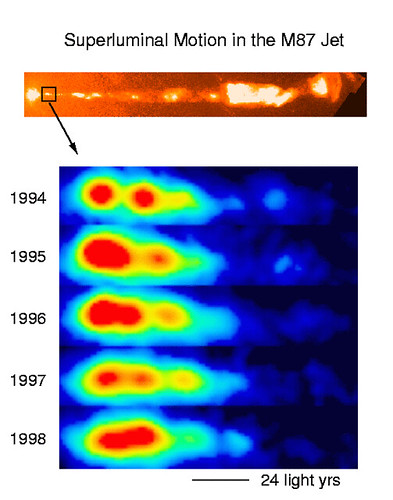
I’m seeking the Superluminal stride,
Between the Tides with you.

Flood.

“The sound of the faces in the crowd.”

color4